


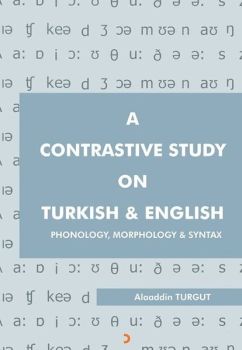
A Contrastive Study On Turkish and English: Phonology Morphonology and Syntax
0,0
0genel
0,0
0arkadaş


listeme ekle
okudum
detaylar
yorumlar
video yorumlar
A Contrastive Study On Turkish and English: Phonology Morphonology and Syntax
Why are languages compared and contrasted? There may be two answer to this: One answer is to find out which languages have a common origin and are members of a language family. This was the main concern in the rise of Comparative Linguistics. It was after these curious studies that languages were sorted out in language families.
One other answer is related to language teaching. It has been a useful contribution to Teaching Methodology. Languages have similarities and differences. So do Turkish and English. Concentration on these similarities and differences gives effective results in teaching a foreign language.
Many languages were compared and contrasted from various points of view. Although several language categories were contrasted between English and Turkish, there has not been a comprehensive contrastive study between the two languages.
This book compares and contrasts the phonology, morphology and syntax of two languages in detail, pointing out 101 error areas, 15 similarities, and 19 warnings in addition to supplementary exercises.
The book works in two ways for the Turkish learners of English and for the English learners of Turkish, and is also planned for self-learning. Students, translators and especially interpreters may find it useful in several ways.
(Tanıtım Bülteninden)
orijinal adı
a contrastive study on turkish and english: phonology morphonology and syntax
türler
yabancı diller
baskı sayısı
1. basım
kitap dili
i̇ngilizce
orijinal dili
i̇ngilizce
yayıncı
cinius
yayın tarihi
01 Oca 2024