


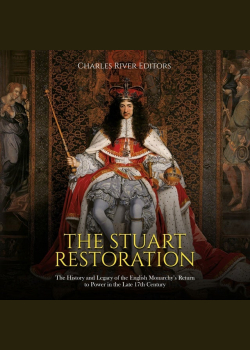
The Stuart Restoration: The History and Legacy of the English Monarchy’s Return to Power in the Late 17th Century
0,0
0genel
0,0
0arkadaş

listeme ekle
dinledim
detaylar
yorumlar
video yorumlar
The Stuart Restoration: The History and Legacy of the English Monarchy’s Return to Power in the Late 17th Century
Oliver Cromwell is one of the most important men in England’s history, but everything he struggled for collapsed within two decades of his death. The army, Parliament and the citizens of London grappled with each other for control of the country, and even the army no longer remained a united political force. Civil war almost broke out again as a force under Lambert failed to prevent General Monck, the military governor of Scotland, from marching south and dissolving the Rump Parliament. Excluded MPs were restored on condition that they themselves dissolve Parliament, and following fresh elections without military intervention, a new Parliament met on April 25, 1660. Dominated by Presbyterians and Royalists, it accepted a settlement offered by the man titling himself Charles II, the son and heir of Charles I. On May 25, 1660, Charles II returned to England, and less than two years after Cromwell’s death, his work was undone by the Restoration. King Charles II heaped ignominy upon defeat by having Cromwell’s body dug up and posthumously executed. Cromwell’s body was then decapitated, as was Ireton’s, and their heads were placed on a pike above Westminster Hall, where Charles I had been tried, for several years.
tür
tarih
süresi
0 dakika
yayıncı
charles river editors
yazar
charles river editors
seslendiren
kc wayman